

Lici
Carmichael
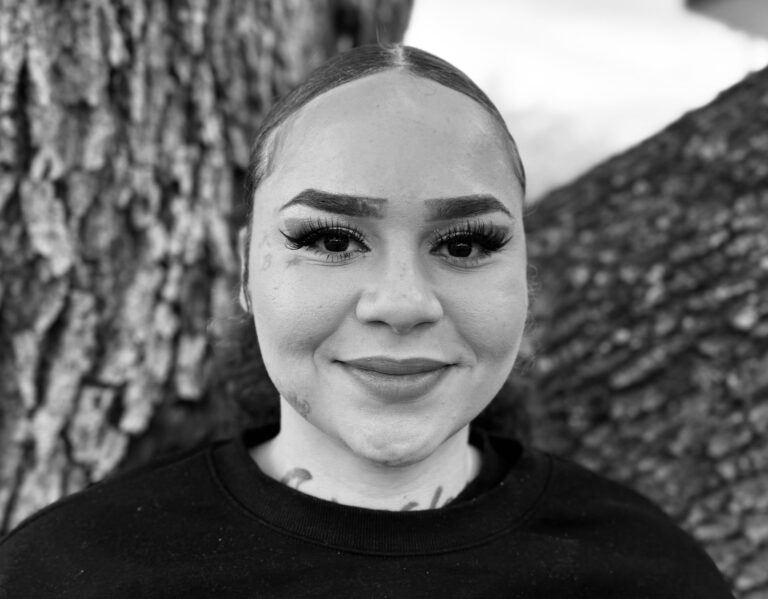
I Turned Wounds into Words. Now I’m Using Them to Fight.
The Story
I want to tell you something, and I want you to hear it the way I mean it: I am not my worst moment. I am not my case number. I am not the girl in the headlines or the name on a sentence. I am a person—a whole, complicated, still-becoming person—and I have a story that is so much bigger than the one the system chose to tell about me.Before I tell you who I am now, I need you to understand something about who I was then. I was a child. I was fifteen. I was in a situation that I did not create, did not choose, and did not have the power to leave. I was being controlled by someone who used me, and when the consequences came, they fell on me. Not on the person who put me there. On me.
What They Saw
The officers saw a repeat offender. Six arrests before I turned fourteen. Six times handcuffed, booked, processed, and sent back out into the same situation that would bring me right back. Every single time, they asked me the same thing: what did you do? And every single time, no one asked the question that could have changed everything: what is being done to you?
“You saw behavior, you didn’t see survival. You saw attitude, you didn’t see fear. You saw a case, you didn’t see a little girl.”
I was not a problem to manage. I was a child in pain. And the system that was supposed to protect me instead added to the long list of adults who looked at me and saw something to deal with, not someone to help.
What the Sentence Did
They gave me twenty years. Twenty years. I had only been alive for fifteen. Try to imagine hearing that as a teenager—hearing a number that is bigger than your entire existence up to that point, knowing that it will swallow every year you have left of your youth and most of your adulthood.For a long time, that sentence was the loudest thing in my life. It was louder than my own thoughts, louder than my own voice, louder than anything I could say or write or feel. It was designed to be the final word. And for a while, I let it be.
What I Found in the Silence
But here is the thing about silence: it can break you, or it can become the space where you finally hear yourself. I did not discover writing in a classroom. I discovered it in the quiet, in the emptiness, in the place where everything had been taken—my freedom, my childhood, my control over my own body—and the only thing left was what was happening inside my head.I started writing. Not for anyone. Not for a grade or a publication or a campaign. I wrote because I had to. Because the words were in me and they were going to come out whether I put them on paper or not. And once I started, I could not stop.
“They could lock up my body, but they could never lock up my truth.”
I wrote poems about my mother, whose promises were written in red—the color of danger, of broken commitments, of everything that was supposed to protect me but didn’t. And I wrote about the promises I am making to myself, and those I would write in gold. Not soft yellow. Not pale gold. Gold—because gold is forged in fire. Gold survives heat. Gold is refined under pressure. Gold does not disappear when it is burned. It becomes purer.
What I Am Building
People ask me how I describe myself now. I say three words: unfinished, resilient, and purposeful. Unfinished because I am still growing, still healing, still becoming. My story did not end with my worst chapter, and I refuse to let it. Resilient because I have survived what was designed to break me. And purposeful because I have found the thing I was put here to do.I write for the children who are where I was. The ones the system is processing right now—labeling, sentencing, discarding—without ever stopping to ask what happened to them. I write because somebody has to, and because I know what it feels like to need someone to stand in the gap and say: this child is not disposable.
“If nobody cares about kids like me, I will. If nobody stands in the gap, I will. I refuse to let another child think they’re disposable just because the world treated them that way.”
What I Need You to Understand
I am not asking you to excuse what happened. I am asking you to see the full picture. I am asking you to hold the complexity—that a person can be both a victim and someone who caused harm, that a fifteen-year-old under the control of a trafficker does not make decisions the way a free adult does, that a sentence can be legal and still be unjust.I am asking you to listen. Not to me as a case study or a cautionary tale or a symbol. To me as a person. A person who turned wounds into words, silence into speaking, and shame into protection for someone else.
If I could introduce myself to you without the weight of what happened, without the case number and the conviction and the years, I would say this: I am becoming. And that is powerful enough.
“My writing is my voice. When I speak I’m not heard. To read this is your choice. It’s nothing forced. I’ve been shut down and silenced my whole life. Now I will use my voice to fight.”
— from “My Writing Is My Voice”